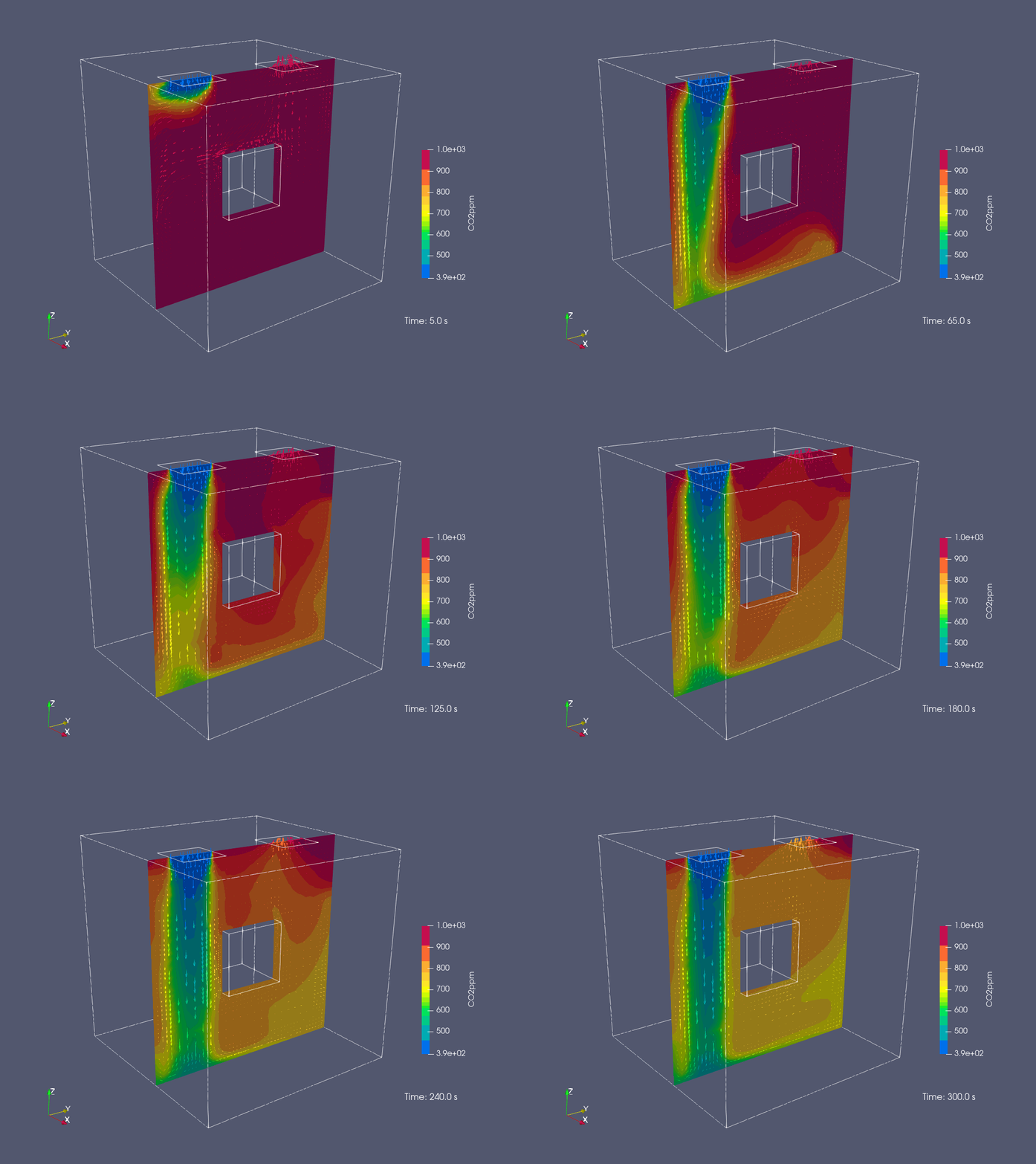
Qirui Huang, RWTH Aachen University, shares their recent paper, Carbonfly: An easy-to-use Python library and Grasshopper toolbox for CO2-based indoor airflow and air quality CFD simulation
This paper introduces Carbonfly, an open-source Python library and Grasshopper toolbox. This tool enables users to execute CFD simulations for CO2-based indoor airflow and air quality analysis within parametric design workflows using the OpenFOAM framework in the background. Validated preset boundary conditions are provided and can be applied to building models with mechanical, natural, or hybrid ventilation systems. Comprehensive documentation, video tutorials, and examples are provided to guide users through the installation and utilization process. Carbonfly addresses the gap in easy-to-use CO2 simulation tools that can be integrated into the early design stages of buildings within a parametric design workflow in Grasshopper within Rhino. This is particularly significant for architectural design, especially in the context of healthy buildings, especially those centered on indoor air quality. Read More (https://doi.org/10.1016/j.softx.2026.102580) SoftwareX, Volume 34, June 2026

Brett Singer, Lawrence Berkeley National Lab
Coarse mode respiratory aerosols can carry viral loads over long distances and have very different dynamics than submicron particles, but experimental studies under realistic conditions remain limited. To study the differential impacts on exposure under different mixing conditions, we co-released 7–10 µm particles and carbon dioxide (CO2)—which served as an indicator of gas and submicron particle dynamics—in a 158 m3 room at LBNL’s FLEXLAB facility with an overhead heating, ventilation, and air conditioning (HVAC) system. The room was arranged as a distanced meeting then a classroom with eight heated manikins and a researcher. Spatial variability was measured using 16 particle counters and 22–26 CO2 sensors throughout the space. Conditions included: HVAC off or supply air at 1000-1060 m3 h-1 at neutral, cooling, or heating temperatures; with and without 20% outdoor air; and added HVAC filtration, portable air cleaners (PACs), or a physical barrier between the speaker and occupants. We found that good mixing via neutral or cooling supply air or use of PACs under heating lowered coarse particle exposure at some locations, but increased exposure for one-quarter to two-thirds of manikins compared to poor mixing under heating. A physical barrier reduced direct transfer of coarse particles during heating, but less during cooling. High spatial variability shows that a single measurement cannot represent occupant exposure. Instantaneous air mixing assumptions overstate the effectiveness of ventilation, HVAC filtration, and upper-room germicidal ultraviolet disinfection for coarse particles, as relatively few particles reach the return grille or upper room under most conditions. Read More (https://doi.org/10.1016/j.buildenv.2026.11433) Building and Environment, Volume 293, April 2026
Xin Guo, Syracuse University
Low-cost and portable volatile organic compound (VOC) sensors, such as metal oxide (MOx) sensors have been developed and implemented in many indoor environments. But there is a lack of comprehensive studies on how accurate and reliable these sensors are and how to interpret the data from such sensors. This study aims to address these gaps in knowledge and data by conducting a comprehensive evaluation of current low-cost VOC sensors. The performance and limitations of the sensors were assessed in terms of stability, sensitivity, accuracy, detection limits, and recovery time for 11 individual VOCs of indoor air quality (IAQ) concern including toluene, formaldehyde, acetone, dichloromethane, tetrachloroethylene, 1,1,1-trichloroethane, m-xylene, naphthalene, acetaldehyde, phenol, and benzene. A standard procedure was developed for investigating the sensors in a 50 L stainless steel chamber with various VOC concentration levels that are relevant to realistic indoor environmental conditions. A total of seven types of commercially available off-the-shelf sensors with different configurations of various operating temperatures and sleep cycles, were tested. Read More (https://doi.org/10.1016/j.buildenv.2026.114232) Building and Environment, Volume 291, March 2026
Brett Stinson, Portland State University
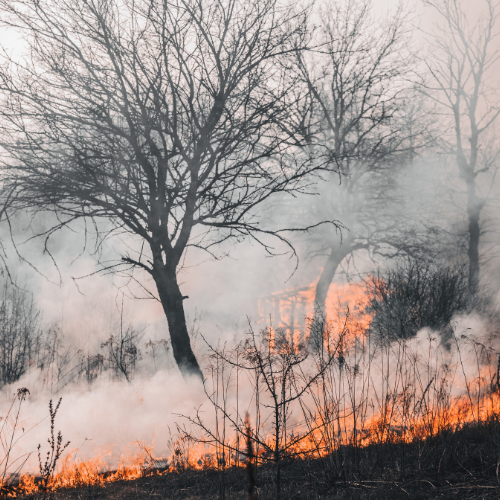
Characterizing Indoor Surface VOC Contamination After the 2025 Los Angeles Fires” in Environmental Science & Technology Letters, with co-authors Emily Lei and Elliott Gall.
About the study:
Results:
Read More (https://doi.org/10.1021/acs.estlett.5c01015) American Chemical Society, February 2026


Xin Guo, Syracuse University, was awarded the Ken Bobis Student Poster Competition Award for an exceptional poster in the Graduate Non-Design category, by The Advisory Council of the 23rd Annual New York State Green Building Conference in 2025.
Distinguished Professor Lidia Morawska, QUT Vice-Chancellor Launches Groundbreaking Project to Retrofit P Block Building to Meet Proposed IAQ Standards. A successful launch of the ARC Training Centre for Advanced Building Systems Against Airborne Infection Transmission (Thrive)'s P Block Project held at QUT (Queensland University of Technology) on 12 December 2025. This project is a world-first initiative, led by D/Prof Lidia Morawska, to demonstrate that existing buildings can meet proposed indoor air quality (IAQ) standards. The three-year project will retrofit P Block, the 13-year-old Science and Engineering Building at Gardens Point, transforming it into a real-world model for IAQ excellence. It will monitor and validate air quality improvements aligned with proposed global standards designed to safeguard human health. The initiative was inaugurated by QUT’s Vice-Chancellor, Professor Margaret Sheil AO, and Registrar, Ms Leanne Harvey, alongside key academic and industry partners.

Distinguished Professor Lidia Morawska, gave evidence as an Expert Witness on 19 February 2026, at the NSW Parliamentary Clean Indoor Air inquiry, alongside colleagues, partners, and many more. Read our submission here.
Watch it here: https://ponsw.events.corrivium.live/jubilee
Fátima Sofia Felgueiras (LAETA/INEGI), successfully defended her PhD thesis in Occupational Safety and Health at the University of Porto, entitled “Effects of an indoor environmental quality intervention program on well-being,comfort, health and productivity among office workers”.
The thesis aimed to explore and address critical aspects of indoor environmental quality (IEQ) in office spaces, with a particular focus on the development, implementation, and evaluation of tailored interventions to improve the work environment. These interventions included nature-based solutions, such as the introduction of potted plant species known for their air-cleaning potential, as well as ventilation- and source control–based strategies.
This work makes significant contributions to advancing the understanding of the factors influencing IEQ and their impact on workers’ well-being, comfort, health, and productivity. Furthermore, it provides empirical evidence on the effectiveness of a tailored environmental intervention program that employs low-cost and easy-to-implement measures to enhance both IEQ and office workers’ outcomes.
Philomena M. Bluyssen presented the second session titled “The need to go beyond comfort-based dose-related indicators in our IEQ guidelines” based on the paper with the same title published in the diamond-issue. as part of the webinar series to celebrate 60 years of Building and Environment. The webinar was hosted by Mandana S. Khani.